
Aluminium pressure die casting components: India vs China sourcing guide for OEM buyers (2026)
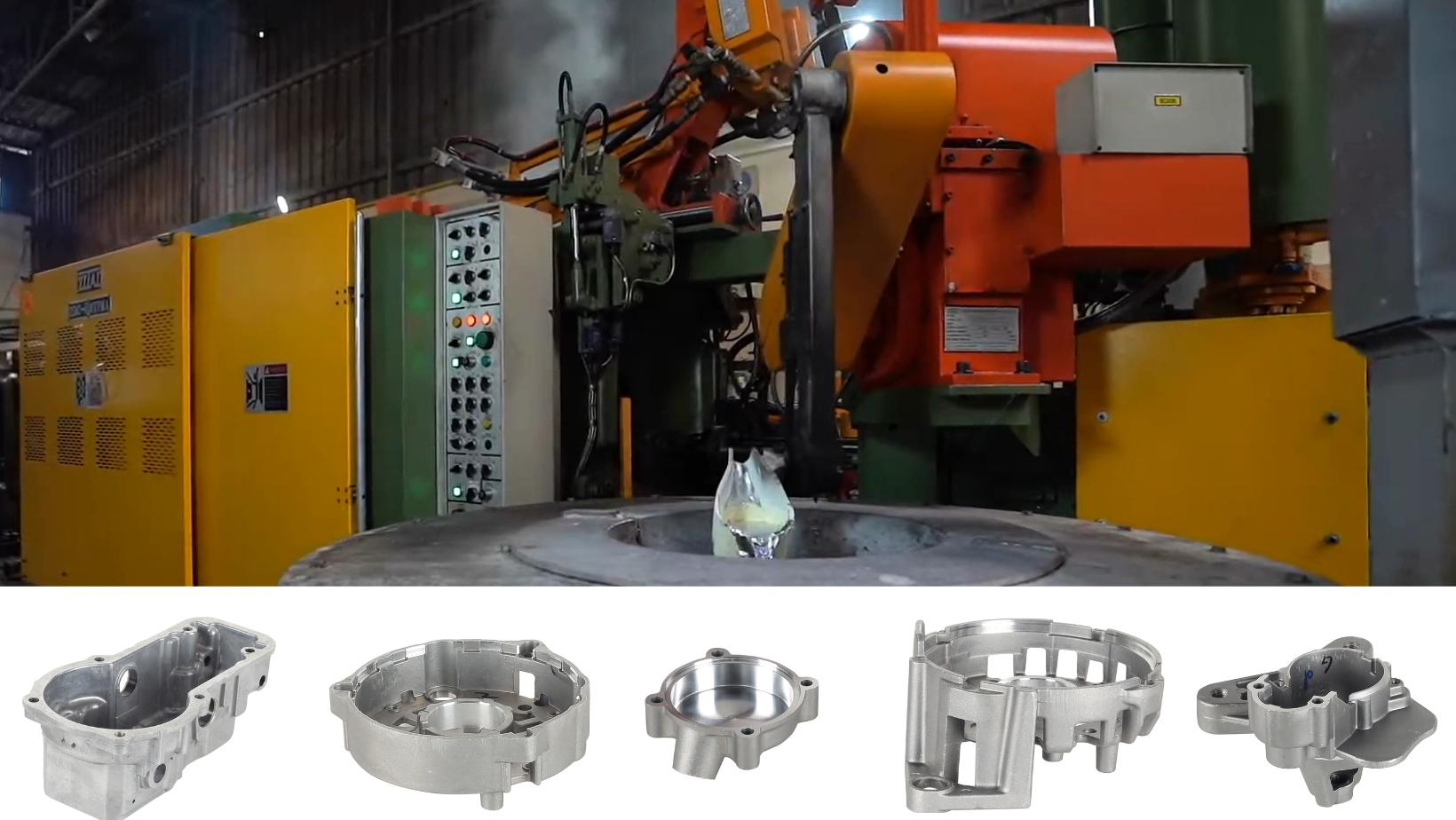
For OEM procurement teams sourcing aluminium pressure die casting components in 2026, the decision is rarely about country labels – it is about program fit, tooling support, and total landed cost. This guide explains the process, the components it suits, the quality drivers that matter, and a balanced India vs China sourcing framework you can defend internally.
Direct answer: Aluminium pressure die casting components are repeatable metal parts formed by injecting molten aluminium alloy into a steel die under high pressure. For 2026 OEM sourcing, buyers should compare suppliers in India and China on program fit, tooling support, machining integration, quality systems, and total landed cost rather than country labels alone.
Key takeaways
- What pressure die casting is: Molten aluminium is injected into a steel die under high pressure to produce repeatable, dimensionally consistent components.
- Typical components: Engine-related components, transmission housings, structural parts, and other precision housings or complex industrial components.
- Process choice matters: HPDC suits thin-walled, complex, higher-volume parts; gravity die casting can fit different geometries and production economics.
- Sourcing decision: Supplier capability, engineering support, and production fit matter more than assumptions about country of origin.
- Buyer focus for 2026: Tooling support, alloy selection, machining integration, quality systems, lead time, MOQ, and total landed cost outweigh piece price alone.
- Lamda Components fit: A Bangalore-based manufacturer and exporter established in 1987, offering die making, pressure die casting, precision machining, and finishing under one roof. Learn more about our company.
What are aluminium pressure die casting components?
Aluminium pressure die casting components are metal parts produced by high-pressure die casting process fundamentals, injecting molten aluminium alloy into a hardened steel die under high pressure, then solidifying and ejecting the part. The process delivers tight tolerances, good surface finish, and high repeatability across long production runs, which is why OEM buyers favour it for complex, precision-critical parts.
These components are widely used across automotive and industrial supply chains. Typical examples include engine-related components, transmission housings, structural parts, and other precision housings or complex metal parts that demand consistent geometry at scale and benefit from well-designed tooling. Explore our full range of aluminium die cast products to see the component families we routinely produce.
Commonly specified die-casting grades vary by regional standard and application, and buyers should reference common aluminium die casting alloy standards when aligning alloy selection with the drawing, performance requirements, and downstream machining or finishing needs.
How aluminium pressure die casting differs from other casting routes
Pressure die casting differs from sand casting and gravity die casting in three practical ways relevant to OEM buyers:
- Fill method: High-pressure injection in HPDC, versus gravity-fed flow in gravity die casting and pouring into a sand mould in sand casting.
- Tooling intensity: HPDC requires a hardened steel die with higher upfront cost but supports very long production runs at low unit cost.
- Geometry and walls: HPDC enables thinner walls, finer features, and complex geometry with strong repeatability, which is harder to match through gravity or sand routes.
How the aluminium pressure die casting process works
The HPDC process is a tightly sequenced cycle designed for repeatability and throughput. Most production cells follow the same fundamental steps:
- Die preparation and lubrication – the steel die is cleaned, sprayed, and thermally conditioned for the next shot.
- Alloy melting and dosing – aluminium alloy is melted, held at temperature, and dosed accurately into the shot sleeve.
- High-pressure injection – molten metal is forced into the die cavity at high velocity and pressure.
- Solidification under pressure – the part solidifies rapidly while pressure is held to support consistency through the cycle.
- Ejection – the die opens and ejector pins release the cast component.
- Trimming, deflashing, and inspection – runners and flash are removed; the part moves to secondary operations or inspection.
You can see this workflow in action across our manufacturing facilities, where casting, machining, and finishing run under a single roof.
Where defects originate and how they are controlled
Most defects in aluminium die castings can be traced back to root causes of die casting defects that suppliers must control proactively:
- Gating and venting design: Poor flow paths can trap air and increase defect risk.
- Shot parameters and process stability: Inconsistent injection velocity, pressure, or dwell time creates batch-to-batch variation.
- Alloy handling and melt quality: Melt cleanliness and temperature control affect downstream performance.
- Die maintenance and thermal balance: Worn cavities, blocked vents, or uneven cooling can produce dimensional drift and surface defects.
Did you know? Tooling design decisions made early can affect quality risk, die life, unit cost, and machining performance later in the program. Spending engineering time at the DFM stage usually pays back across the production life of the part, which is why design for manufacturability principles in casting should be applied early.
Components commonly made with high pressure die casting
HPDC is selected when a component combines complexity, thin walls, dimensional precision, and meaningful volume. The table below maps common component families to why HPDC fits, typical secondary operations, and the industries that buy them.
Component type | Why HPDC fits | Typical secondary operations | Common industries |
Electrical housings and enclosures | Thin walls, complex internal features, EMI containment | CNC machining, powder coating, shot blasting | Electrical, electronics, appliances |
Heat sinks | Fine fin geometry, repeatable thermal performance | Deburring, anodizing, machining of mating faces | LED lighting, power electronics, EV |
Gearbox and transmission housings | Pressure-tight cavities, tight bore tolerances | Precision machining, leak testing, washing | Automotive, EV, industrial drives |
Pump bodies | Sealed chambers, complex porting | CNC machining, leak testing, resin impregnation | Hydraulics, fluid handling, fuel systems |
Brackets and structural parts | Stiffness at low weight, complex ribbing | Trimming, machining of mounting faces | Automotive, off-road, industrial equipment |
Lighting bodies | Reflective surfaces, mounting features in one piece | Shot blasting, powder coating, painting | LED, architectural, automotive lighting |
Examples of our own production in these families include aluminium housings for industrial applications and LED street lighting bodies cast and finished in-house.
High pressure die casting vs gravity die casting
HPDC injects molten aluminium into a steel die at high pressure, producing thin-walled, complex parts at high cycle rates with strong repeatability. Gravity die casting fills the die using gravity, suits thicker sections and lower-to-mid volumes, and typically allows different alloy and metallurgical choices – see this gravity die casting process overview for comparison. The right route depends on geometry, volume, tolerance, and tooling economics.
Factor | High pressure die casting (HPDC) | Gravity die casting | Buyer implication |
Fill method | Pressure injection | Gravity flow | HPDC supports thinner walls and finer features |
Tooling intensity | High (hardened steel die) | Moderate | HPDC needs higher upfront investment |
Cycle time | Short, automated | Longer, semi-automated | HPDC suits higher annual volumes |
Surface finish | Generally smoother as-cast | Coarser as-cast | HPDC reduces some downstream finishing |
Tolerances | Tight, repeatable | Looser, more variation | HPDC supports near-net-shape design |
Volume fit | Mid-to-high volume programs | Low-to-mid volume programs | Match process to annual demand |
Typical parts | Housings, heat sinks, brackets, gearbox parts | Thicker, simpler structural parts | Component geometry drives the call |
Industries that use aluminium die cast components
Aluminium die cast components are foundational across sectors where weight, repeatability, and precision matter at scale.
- Automotive: Engine-related components, transmission housings, and structural parts.
- Industrial manufacturing: Precision housings and complex components used in equipment and machinery.
- Broader engineering applications: Metal parts that require repeatability, dimensional consistency, and efficient production at scale.
For export-oriented programs across these sectors, review our export products portfolio to see representative components shipped to international OEMs.
What affects quality: alloy, tooling, machining, and inspection
Casting quality is the sum of four decisions taken across the program: alloy choice, tooling design, secondary machining strategy, and the inspection and documentation regime. Treat them as one system, not four separate stages.
Alloy selection
Alloy choice should be driven by mechanical requirements, castability, machinability, and finish needs. Buyers often encounter die-casting grades referenced to different regional standards, so the key is to ensure the alloy is specified clearly on the drawing and matched to the application. As a buyer:
- Confirm the alloy is specified by standard on the drawing.
- Align alloy with the dominant downstream operation – machining, coating, or another finishing step.
- Ask the supplier for material certificates with each lot.
Tooling design and die life
Tooling is the single biggest lever on long-term unit cost and part quality. Key decisions include cavity count, die steel grade, gating and runner design, cooling layout, and slide and core configuration. Well-designed tools support longer shot life, lower defect risk, and cleaner ejection – which means lower scrap, less rework, and steadier downstream machining.
Secondary machining and surface finishing
Most die cast parts are not finished products straight out of the die. Typical secondary operations include:
- CNC machining of mating faces, bores, and threaded features
- Shot blasting and vibro deburring for surface preparation
- Resin impregnation for pressure-tight castings is used for fluid- or gas-handling parts that must pass leak testing
- Leak testing for fluid- or gas-handling parts
- Anodizing aluminium surface treatment, powder coating, or painting for protection and appearance
Treating casting and machining as a single workflow – ideally under one roof – reduces handoff defects, dimensional drift, and lead-time risk.
Quality control and documentation
For OEM programs, casting suppliers should support a documented quality system aligned with ISO 9001 quality management requirements and, for automotive work, the IATF 16949 automotive quality standard which governs PPAP and audit readiness. Buyers should expect dimensional inspection reports, material certificates, leak test records where applicable, and PPAP submission requirements documentation packages for production approval.
Pro tip: Evaluate casting quality together with secondary machining, leak testing, and inspection. A clean as-cast part that fails leak testing or drifts during machining still costs the program money.
India vs China for aluminium pressure die casting components
For 2026 OEM sourcing, neither India nor China is universally “better.” The more useful comparison is supplier fit: tooling support, engineering responsiveness, machining integration, quality systems, communication, and total landed cost. The right answer depends on program fit, not country bias.
Sourcing factor | India – typical considerations | China – typical considerations | Why it matters | Best-fit scenario |
Engineering collaboration | Strong English-language DFM dialogue, accessible engineering teams | Established engineering depth in mature clusters | Faster design iterations reduce risk | India favours collaborative new programs |
Tooling ownership and IP | Generally clear contractual ownership and storage terms | Highly capable tooling networks; clarify IP terms early | Die ownership controls program continuity | India often simpler for export OEMs |
Quality systems | ISO 9001 / IATF 16949 supplier base growing across clusters | Long-established quality system maturity at scale | Drives PPAP and audit readiness | Match to standard your program requires |
Machining and finishing integration | Many suppliers offer integrated casting + machining + finishing | Often available at the largest suppliers | Reduces handoff defects and lead time | India favourable for mid-volume integrated work |
Lead time and MOQ flexibility | More flexible MOQs for mid-volume OEM programs | Optimised for very large volumes | Affects working capital and inventory | India fits mid-volume, China fits high-volume |
Export documentation | Routine for India-based exporters | Routine for China-based exporters | Smooths customs and compliance | Both viable; verify per supplier |
Communication and time zone | Closer to EMEA working hours; English-led | Larger night-shift coverage for US buyers | Affects RFQ cycle speed | Choose based on buyer location |
Supply-chain diversification | Core China+1 destination for OEMs | Often the incumbent; diversification target | De-risks single-country exposure | India suits diversification mandates |
Total landed cost | Competitive on integrated mid-volume programs | Competitive on very high-volume programs | Drives true program economics | Run TCO, not unit-price comparison |
When an India-based supplier can be a practical fit
- Programs needing close engineering dialogue and quick DFM iteration.
- Mid-volume programs requiring integrated tooling, casting, and machining under one supplier.
- Buyers that value responsive communication and clear project handling.
- Programs where supplier accessibility matters alongside price.
When an incumbent high-volume supply base may still suit a program
- Very high-volume existing programs with mature, fully amortised tooling.
- Buyers with established supplier ecosystems and stable logistics flows.
- Programs where switching cost outweighs the immediate benefit of change.
India suits diversification mandates and is increasingly positioned as a core China Plus One sourcing strategy destination for OEMs.
Did you know? The lowest quoted unit price may not be the lowest total landed cost once tooling support, scrap risk, documentation, export handling, and supplier responsiveness are included. Run a total landed cost calculation framework comparison, not a unit-price comparison, when evaluating supplier quotes.
How to evaluate an aluminium die casting supplier
A defensible supplier selection comes from a structured checklist, not a single quote comparison. The framework below maps the criteria that matter most, the questions to ask, and the evidence a credible supplier should produce.
Criterion | Why it matters | Questions to ask | Evidence to request |
Tooling and die making | Drives unit cost, quality, and die life | Who designs and owns the die? Where is it stored? | Tooling drawings, ownership clauses, maintenance logs |
Alloy and metallurgy support | Affects mechanical and surface properties | Which alloys do you run regularly? | Material certificates, alloy traceability |
Tolerance capability | Determines machining stock and fit | What as-cast tolerances do you hold? | Process capability data |
Secondary machining | Reduces handoffs and defects | Is CNC machining in-house? | Machining floor walk-through or video |
Surface finishing | Affects appearance and protection | Shot blasting, anodizing, powder coating in-house? | Process flow chart |
Quality systems | Anchors audit and PPAP readiness | ISO 9001, IATF 16949 status? | Valid certificates |
Lead time and MOQ | Drives working capital | Sampling, tooling, and production timelines? | Documented schedule examples |
Export readiness | Smooths cross-border logistics | Export experience and incoterms? | Past export documentation |
Communication and engineering response | Affects RFQ velocity | RFQ turnaround, ECN handling? | Named engineering contact |
Die ownership and continuity | Protects program continuity | What happens if production is paused or moved? | Written die transfer policy |
If a virtual floor walk-through is useful at the shortlisting stage, our video gallery shows the casting, machining, and finishing cells in operation.
Buyer tip: Ask suppliers about die ownership, sample approval timelines, and how engineering changes are managed mid-program. These are the questions that separate a quoting vendor from a long-term sourcing partner.
Top aluminium pressure die casting components manufacturers to consider
The shortlist below uses a transparent evaluation rubric: end-to-end manufacturing capability, engineering and tooling support, export readiness, quality systems and process visibility, and program stability over time. The goal is to help OEM buyers compare suppliers on a like-for-like basis.
1. Lamda Components Pvt. Ltd.
Lamda Components Pvt. Ltd. is a Bangalore-based manufacturer and exporter established in 1987, specialising in aluminium die casting products, precision steel parts, precision machining, die making, and off-road vehicle accessories. The company runs an end-to-end workflow – die making, pressure die casting, shot blasting, vibro deburring, resin impregnation, precision machining, leak testing, anodizing, powder coating, and sub-assemblies – under one roof.
Die casting production is supported by automated machines in the 250 to 800 ton range with auto ladle, auto spray, and auto extractor systems. Castings serve sectors including fuel injection pumps, alternators and starter motors, electric vehicle motors, textile machinery, hydraulic equipment, off-road products, automotive, LED lights and door closures, electrical and household appliances, pneumatic products, and medical equipment. Lamda is a strong fit for OEM buyers prioritising integrated capability and engineering responsiveness from a single Indian partner.
2. Dynacast
A global manufacturer of precision die cast and engineered metal components, Dynacast competes on advanced die casting capability and an international footprint. Suited to buyers needing global manufacturing presence across multiple regions.
3. PHB Inc.
PHB handles aluminium die cast manufacturing from mould design and testing through to precision aluminium machining and finishing. Close in scope to a single-window manufacturing partner for end-to-end programs.
4. American Precision Die Casting (APDC)
An aluminium die casting supplier focused on competitive pricing, short lead times, automation, and quality control – relevant for North America–anchored buyers comparing regional options.
5. Fictiv
A managed manufacturing platform that connects buyers to die casting and CNC machining suppliers across a global network. Best suited to teams that prefer platform-managed sourcing for prototype-to-production workflows.
6. Ryobi Die Casting
A major aluminium die casting supplier with a strong presence in automotive parts manufacturing. Most relevant to large automotive OEM programs sourcing established, very high-volume components.
Why Lamda Components is a practical India-based sourcing partner
Lamda Components combines longevity, integrated scope, and engineering-led production in a single Indian supplier – a combination OEM buyers increasingly look for when building an India-based or multi-source program.
The company has operated since 1987 from Bangalore, serves OEM and industrial customers in domestic and international markets, and emphasises end-to-end quality ownership rather than handing parts across multiple vendors.
What buyers get:
- Single-window manufacturing from die design and tooling through to dispatch.
- Engineering review during RFQ and DFM, not only after the order is placed.
- Integrated casting, machining, finishing, and sub-assembly that reduces handoff defects.
- Export-oriented documentation, communication, and project management.
Send your drawing or component requirements for a technical review. Contact our engineering team or submit an enquiry with your part drawing.

Frequently asked questions
Aluminium pressure die casting is a metal forming process in which molten aluminium alloy is injected into a hardened steel die under high pressure, then rapidly solidified and ejected. OEM buyers use it for repeatable, dimensionally consistent components with good surface finish, thin walls, and complex geometry at mid-to-high production volumes.
Common pressure die cast components include engine-related components, transmission housings, structural parts, and other precision housings or complex metal components used in automotive and industrial supply chains. These parts are well suited to HPDC when they combine complex geometry, repeatable tolerances, and production volumes that justify tooling.
High pressure die casting injects molten aluminium into a steel die under pressure, supporting thin walls, complex features, and high cycle rates. Gravity die casting fills the die using gravity, suiting thicker sections and lower-to-mid volumes. HPDC needs higher upfront tooling investment but delivers lower unit costs across larger production runs.
Aluminium die cast components are used across automotive and broader industrial manufacturing where repeatability, dimensional consistency, and production efficiency matter. Typical end-uses include transmission housings, structural parts, precision housings, and other complex metal components made at scale.
Neither country is universally better – the right answer depends on program fit. Buyers should compare suppliers on tooling support, machining integration, quality systems, communication, export readiness, and total landed cost rather than unit price alone.
Common die-casting alloys are specified by application and regional standard. Buyers often encounter grades such as ADC12, LM24, or A380, but the correct choice should be aligned with the engineering drawing, mechanical requirements, and downstream machining or finishing needs.
OEM buyers should request material certificates for each lot, dimensional inspection reports, process capability data, leak test records where applicable, and PPAP-style documentation aligned with the program standard. For automotive work, IATF 16949 certification is typically expected; for general industrial work, ISO 9001 is a credible baseline. Always confirm die ownership in writing.

© Copyright 2023 All rights reserved.